here is a particular quiet that arrives about a week after the thing you wanted. The deal closes. The round lands. The title goes on the door. Everyone around you is delighted, and you are standing in the middle of it feeling something suspiciously close to nothing, which is the one reaction you cannot say out loud without sounding ungrateful.
Almost nobody writes for that moment, because almost nobody selling advice has been through it. The whole self-improvement industry is built for the climb. There is very little for the summit, and what exists tends to be written by people who have only imagined it.
Andre Norman has an unusual claim on this particular problem. He was sentenced to more than a hundred years at eighteen, taught himself law in solitary, reversed his own case on appeal, and walked out in 1999. Then he did the thing he had promised himself in the cell, which was to get to Harvard. He describes the arrival in two sentences.
And so when I got to Harvard, it was great. Then I said, “Now what?”
Note what he does not say. He does not say it was hollow, or that he felt like a fraud, or that the win rang empty. It was great. And immediately underneath the greatness was a question with no answer prepared for it, because he had spent fourteen years building a plan that ended at the gate.
The plan stopped where you stopped
This is the mechanism, and it is duller and more fixable than the feeling suggests. You did not aim at the wrong thing. You aimed at one thing, with everything you had, for years, and the plan you built was exactly as long as the distance to it. Cross the line and the plan is spent. What follows is not depression. It is the specific vertigo of having nothing queued.
Your life doesn’t end at that one objective. You have to be prepared to push for more.
There is a second, sharper reason the arrival disappoints, and he names it plainly. You did not arrive at the thing you pictured. Nobody ever does.
They think it’s just the way they envisioned it. And it’s never just the way you envision it.
The version in your head had no cap table, no headcount, no lawyer, no Tuesday. The real one has all of them. That gap is not failure. It is the invoice, and it arrives late.
And as people start getting closer to what they ask for, the reality what comes with it starts popping up. And they’re not prepared for those things.
The parking lot
The most useful image he gives comes from the one experience almost none of his audience shares, and it translates cleanly anyway.
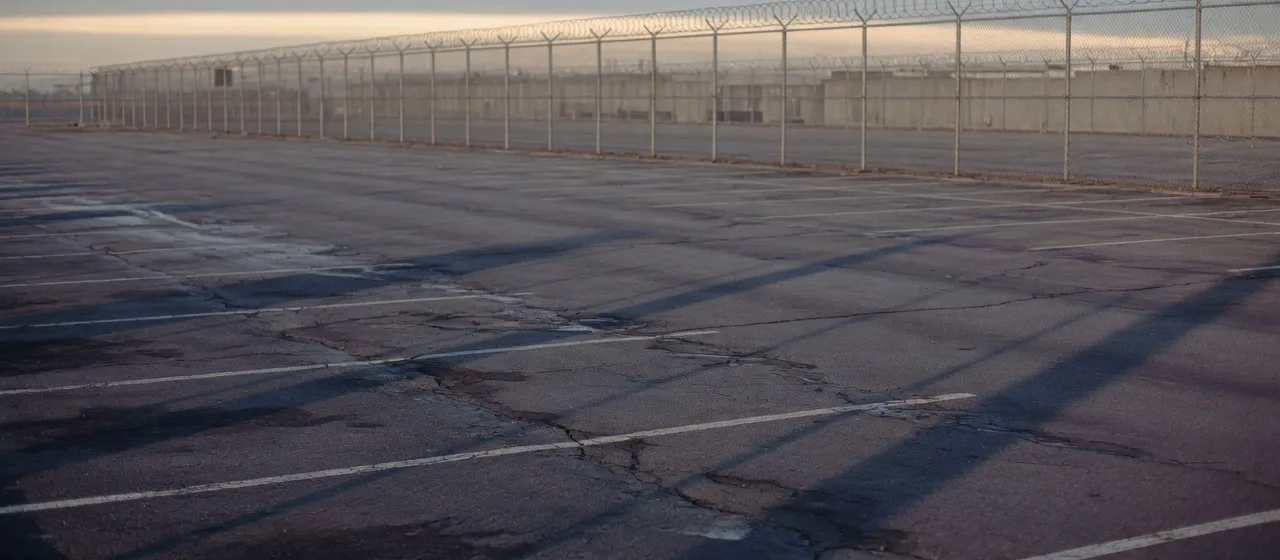
And success doesn’t have an end. People walking out of prison, the parking lot is freedom. People walking out into success, there’s a lot of more hard work to go.
A man serving a long sentence pictures freedom, and freedom is achieved roughly thirty seconds after the door, standing in a car park. Everything that actually constitutes a life, the work, the family, the standing, sits on the far side of that tarmac and was never in the picture. He had aimed at the parking lot for fourteen years.
Your version has better upholstery and the same architecture. You aimed at the exit and got there. The reason it feels thin is that an exit is a thin thing to arrive at, and you are now standing on it wondering why the ground is so flat.
This is why the flatness is good news rather than bad. A feeling that came from choosing wrong would require you to tear something down. A feeling that came from a plan running out requires you to write more plan.
The worst outcome is not failing
Here is the line that should unsettle anyone comfortable, and it is eleven words.
the worst thing you can do is aim low and hit because now you’re stuck
Miss a big target and you are still moving, still learning, still in the process. Hit a small one and you have a trophy, a story, and a reason to stop. Everyone congratulates you. Nothing in your environment tells you anything is wrong. The stuckness is invisible precisely because it is decorated.
I didn’t want to stop at Harvard. I didn’t want to stop at the prison. Wherever you are is where you’ll stay.
That last clause is the whole warning. Not that stopping is dangerous. That stopping is permanent, quietly, by default, while everybody applauds.
Don’t confuse your self worth with your net worth
He says this almost in passing, and for a reader who has the money and still feels flat it is the most load-bearing sentence in the session.
Don’t confuse your self worth with your net worth.
If the number was ever going to fix it, it would have fixed it by now. Which means the ache is not a signal that the number is too small. It is a signal that the number was answering a question you had not actually asked.
His own replacement measure is specific and, notably, not modest. He did not swap ambition for contentment. He swapped the units.
Quality of your life is the impact you have on the world. not by how much is in my bank account. I measure myself by how many people’s lives I made better.
What he actually did on day one
The concrete version of all this is what he did with his first free afternoon after fourteen years inside. Not a restaurant. Not a hotel. He had made a promise to a fifteen-year-old and had a standing appointment with it.
So 90 minutes after I walked out, I simply kept my promise.
That is the whole instruction, delivered as a fact rather than as advice. The next line was already chosen before he crossed the first one. He was not standing in the parking lot deciding what to do with his freedom, because the parking lot had never been the destination.
The practical move for you is smaller and duller than it sounds. Not a new grand ambition, and not gratitude journalling. One question: what did you say you would do, back when the thing you just achieved was still impossible? Most people, when they go looking, find they made a promise somewhere around the bottom of the climb and quietly stopped mentioning it once the climbing got good.
Where to take this next
Two things usually show up alongside the flatness, and both have their own note. The circle you climbed with often stops fitting once you arrive, which feels like guilt and is mostly something else entirely. And if what triggered all this was a hit rather than a win, the useful move is going back for the reason behind it.
Andre teaches the whole of this in Session 6, and the moves that lead to it across the seven sessions. If you would rather hear him make the case himself before reading anything else, start here.